
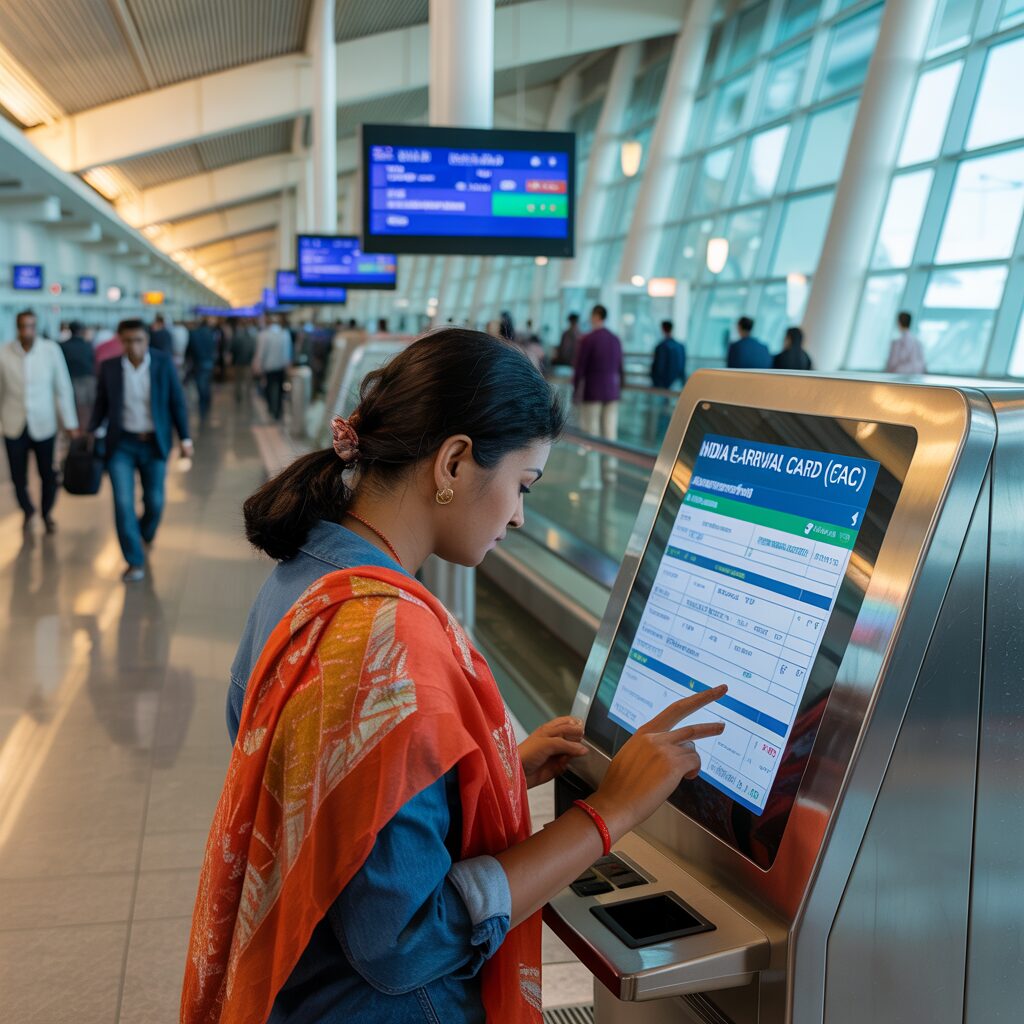
Definition – What Is the India e-Arrival Card?
The India e-Arrival Card (eAC) is a mandatory free digital entry declaration form introduced by the Government of India’s Bureau of Immigration. Beginning October 1, 2025, under the Immigration and Foreigners Act 2025, the eAC replaces the traditional paper disembarkation card that was previously distributed on flights and at ports of entry into India. Every foreign national and OCI (Overseas Citizen of India) cardholder must complete the eAC before arriving in India – it is not a visa, but a compulsory pre-arrival declaration form linked to your passport.
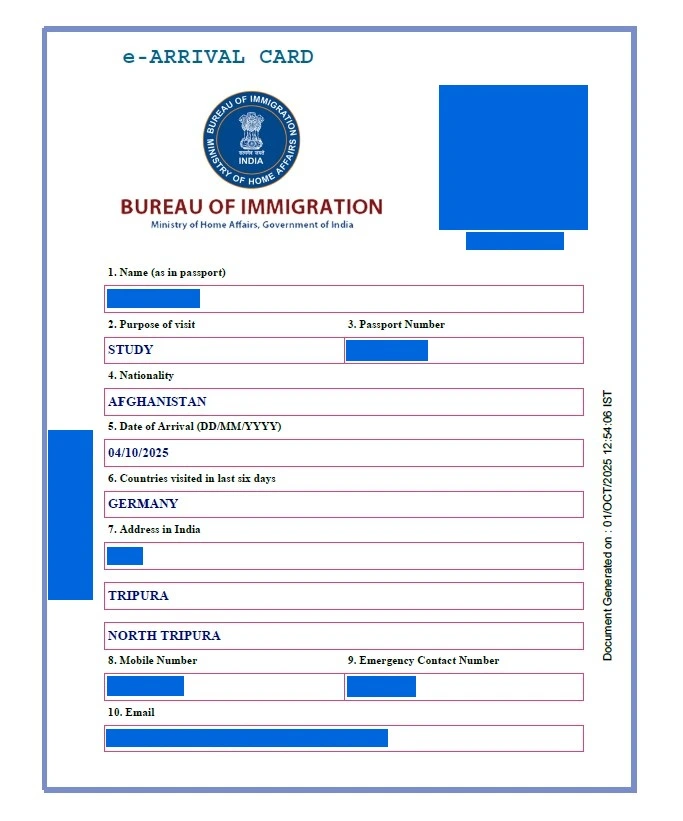
The eAC is completed online via indianvisaonline.gov.in/earrival or through the Su-Swagatam mobile app. Submission generates a QR code that immigration officers scan at the border. The entire process is free and takes under 10 minutes. For detailed application instructions, see our guide: How to Fill the India e-Arrival Card – Step by Step.
Why India Introduced the e-Arrival Card
The Government of India launched the eAC system to modernize and streamline border entry procedures. The transition from paper to digital was driven by several goals:
- Faster immigration processing: Digital pre-screening allows officers to verify traveler data before the aircraft lands, reducing queues at immigration desks
- Error reduction: Handwritten paper forms frequently contained illegible or incorrect data; digital forms include real-time validation
- Data accuracy: Information submitted through the official portal is directly linked to Indian immigration databases
- Health monitoring: The eAC includes a basic health declaration, enabling early identification of health risks
- Environmental benefit: Eliminates millions of paper forms distributed annually on flights to India
The phased rollout began on 1 October 2025 as an optional digital alternative. OCI holders were mandated first (from 4 October 2025), with the full paper-to-digital switch completed on 1 April 2026 when the eAC became mandatory for all foreign nationals.
What Information Does the eAC Collect?
The India e-Arrival Card collects six categories of traveler information:
1. Personal and Passport Details
Full name (exactly as printed on passport), date of birth, gender, nationality, passport number, passport issue date, passport expiry date. For OCI holders: OCI card number is also required.
2. Visa or Entry Permission Details
Type of visa (tourist, business, student, medical, etc.), visa number, date of issue. OCI cardholders enter their OCI card details instead of a visa number.
3. Flight and Arrival Details
Airline and flight number, scheduled date and time of arrival, port of entry (name of airport, seaport, or land border crossing).
4. Accommodation Address in India
Complete address of the hotel, guesthouse, relative’s home, or other accommodation where the traveler will stay during their visit in India. This field is mandatory – “unknown” or vague entries are not accepted.
5. Contact Details
Email address, phone number including country code, and an emergency contact name and phone number.
6. Health Declaration
A brief self-declaration of current health status. This replaces the health form previously distributed on flights. Travelers with certain health conditions may be referred for additional screening on arrival.
e-Arrival Card vs. India e-Visa – What’s the Difference?
Many travelers mistakenly believe the eAC and the Indian e-Visa are the same document. They are fundamentally different requirements:
| Feature | India e-Visa | India e-Arrival Card (eAC) |
|---|---|---|
| What it is | Entry permission (travel authorization) | Entry declaration (pre-arrival notification) |
| Who needs it | Foreign nationals (not OCI holders) | All foreign nationals AND OCI holders |
| Cost | Paid – amount varies by nationality | Free – no charge |
| Application timing | 4-30+ days before travel | Up to 72 hours before arrival |
| If you have a sticker visa | Already have entry permission | Still need the eAC |
| OCI holders | Not required | Required from 4 October 2025 |
Key point: Foreign nationals need BOTH a valid Indian visa (or e-Visa) AND the eAC to enter India. The visa allows entry; the eAC is the digital declaration you make when you arrive. OCI holders need the eAC but not a visa.
Who Is Required to Submit the eAC?
The following categories of travelers must submit the India e-Arrival Card:
- All foreign passport holders entering India for tourism, business, study, or medical purposes
- OCI (Overseas Citizen of India) cardholders – required from 4 October 2025
- Travelers entering by air (any airport), sea (seaport), or land (land border crossing)
- Transit passengers who pass through Indian immigration control
Exempted from the eAC:
- Indian citizens holding a valid Indian passport
- Airside transit passengers who remain in the international transit zone without clearing immigration
For the complete guide to who needs the eAC and how to apply, visit our main page: India e-Arrival Card – Complete Guide 2026.
The QR Code – How It Works at Immigration
When you successfully submit the India e-Arrival Card, the system generates a unique QR code linked to your submission. This QR code is your proof of compliance and serves as your digital arrival declaration.
Here is how the QR code is used throughout your journey:
- At airline check-in: Many airlines now check for eAC completion. Present your QR code (on phone screen or printed) to check-in staff.
- At the boarding gate: Some airports conduct secondary checks. Having your QR code accessible speeds up the process.
- At Indian immigration: The immigration officer scans your QR code. Your pre-submitted data appears on their screen instantly – no paper form is issued or needed.
Important: Save the QR code to your phone gallery or download it for offline access. If you use the Su-Swagatam app, the code is stored within the app. If you applied via the web portal, save the QR code image immediately after submission and keep a backup screenshot or printout.
Timeline – From Paper Card to eAC
India’s transition from paper to digital arrival documentation followed a clear timeline:
- Pre-October 2025: Paper disembarkation card filled by hand on flights and at ports of entry
- 1 October 2025: eAC launched as an optional digital alternative to the paper card
- 4 October 2025: eAC made mandatory for OCI (Overseas Citizen of India) cardholders
- 1 April 2026: eAC made mandatory for all foreign nationals; paper disembarkation forms completely phased out
The legal framework for this change is the Immigration and Foreigners Act 2025, which consolidated and updated India’s immigration legislation and authorized the digital-first entry declaration system.
Frequently Asked Questions
What is the India e-Arrival Card?
The India e-Arrival Card (eAC) is a mandatory free digital entry declaration form introduced by the Government of India. Mandatory from 1 April 2026, it replaces the paper disembarkation card. All foreign nationals and OCI cardholders must submit it via indianvisaonline.gov.in/earrival or the Su-Swagatam app before arriving in India.
Is the e-Arrival Card the same as an Indian visa?
No. The e-Arrival Card is an entry declaration, not a visa. An Indian visa (or eVisa) grants you legal permission to enter India. The eAC is a separate pre-arrival form you must complete regardless of your visa type. Most foreign travelers need both – a valid visa and the eAC.
What replaced the India paper disembarkation card?
The India e-Arrival Card (eAC) replaced the paper disembarkation card. Paper forms were phased out completely on 1 April 2026. The eAC is submitted digitally up to 72 hours before arrival and generates a QR code that immigration officers scan at the border instead of collecting a paper form.
What data does the India e-Arrival Card collect?
The India eAC collects: passport details (number, nationality, issue/expiry), visa or OCI card information, flight details (flight number, arrival date, port of entry), accommodation address in India, contact details (email, phone), emergency contact, and a basic health declaration.
When was the India e-Arrival Card introduced?
The India e-Arrival Card was introduced as an optional system on 1 October 2025. It was made mandatory for OCI cardholders from 4 October 2025, and became mandatory for all foreign nationals from 1 April 2026 under the Immigration and Foreigners Act 2025.
Do OCI cardholders need the India e-Arrival Card?
Yes. OCI (Overseas Citizen of India) cardholders must submit the e-Arrival Card. The mandate for OCI holders began on 4 October 2025, several months before the general mandate for other foreign nationals (1 April 2026). OCI holders do not need a visa but do need the eAC.
What is the Su-Swagatam app?
Su-Swagatam is the official Indian government mobile app for submitting the e-Arrival Card. Available on iOS (App Store) and Android (Google Play), it allows travelers to complete the eAC form, store the QR code confirmation for offline access, and manage their submission history. It is a free, official alternative to the indianvisaonline.gov.in/earrival web portal.
What law made the India e-Arrival Card mandatory?
The India e-Arrival Card was made mandatory under the Immigration and Foreigners Act 2025. This legislation updated and consolidated India’s immigration framework and authorized the Bureau of Immigration to require digital pre-arrival declarations from all foreign nationals and OCI cardholders entering India.
Ready to apply for your eAC? See our complete step-by-step guide: How to Fill India e-Arrival Card
Return to the full overview: India e-Arrival Card 2026 – Complete Guide
For guidance on choosing a trustworthy service, see: Official vs Private India e-Arrival Card Services and How to Avoid India e-Arrival Card Scams.
